
What is the Safe and Sound Protocol?
The Safe and Sound Protocol (SSP) is a powerful listening therapy designed to help regulate the nervous system, so you can better connect with yourself, others and the world around you.
Humans need social connection. Subconsciously, your nervous system is always looking for cues of safety from other people through things like body language, facial expression or tone of voice.
But if you have a harder time interpreting these cues of safety due to past experiences or the way you take in information, your brain and body can misinterpret these cues, limiting your ability to connect in a meaningful way.
How does the SSP work?
Through the specially filtered music, the SSP sends cues of safety to your nervous system, building the foundation for awareness, embodiment and resilience. Find out more
The Benefits Of
Nervous System Regulation
At Brainworks, we’ve designed our neurofeedback technology to bring powerful, science-backed brain training into your home. No complicated tech setups, no guesswork. Just professional-grade brain training tailored to how your brain works best.
.
Improved Response To Stress
When our nervous system is regulated, it’s easier to sleep, eat, digest, concentrate, communicate, and participate in meaningful relationships with others. We can better respond to difficult situations and move past them instead of reacting and getting “stuck” in them.
Better Emotional Regulation
Become attuned to and more in control of emotions, so you can move through temporary setbacks with more flexibility and ease.
More Social Connecton
By activating the part of your brain that allows us to be more social, affectionate and connected, the SSP can help shift you into a state where you are more comfortable and at ease engaging with others, leading to deeper and more meaningful relationships.
Works alongside you, wherever you are on your healing journey.
Supports many symptoms & conditions
The SSP may be helpful in reducing symptoms and supporting overall health and resiliency for people seeking support for:
Depression and anxiety
- Neurodevelopmental differences, such as autism, hyperactivity and attention
- Learning difficulties
- Sensory processing differences
- Trauma history
And more
Works with other therapies
It can also be combined with and is supportive of other therapies, including:
- Neurodevelopmental treatment, such as occupational therapy, play therapy and sensory integration therapy
- Other forms of mental health and trauma therapies, such as Eye Movement Desensitization and Reprocessing (EMDR), Somatic Experiencing® (SE™), and Internal Family Systems (IFS)
- Cognitive behavioral therapy (CBT) and other forms of talk therapy (e.g. DBT, MCBT, etc.)
Listen from almost anywhere
You can listen to the music of SSP either in person with your certified provider or remotely from the comfort of your own home, allowing for flexibility and ease. Your provider will collaborate with you on a listening plan that works for you.
Safe and effective for all ages and families
The SSP has helped over 100,000 children, adolescents and adults in more than 70 countries worldwide. Uniquely, many families experience the SSP together and in support of one another.
What to expect from your experience
The first step is a free 15-minute consultation where we’ll discuss the SSP service and determine if it’s the right fit for you.
Once you’ve decided to move forward, you’ll receive a link to set up your account and download the SSP music directly to your mobile device, making it easy to listen from anywhere.
We’ll then have a detailed intake call, during which we’ll share your personalised listening plan and provide clear instructions on how to use the app.
Your main task is simply to engage with the music and let us know about any sensations—whether emotional or physical—that come up.
Throughout your journey, we’ll have weekly check-ins to monitor your progress. These can be through email, but if needed, we can arrange a call to go over any adjustments or concerns. We’ll make sure your program isn’t moving too quickly or too slowly, finding the right pace for you to get the most out of your listening experience.
At the end of your program, we’ll have a final call to review your journey. We’ll discuss any changes you’ve experienced, reflect on your progress, and evaluate how the SSP has benefited you.
Every step of the way, you’ll have our full support, ensuring a smooth and personalised SSP experience tailored to your needs.
Common Questions About iLs
How does SSP music differ to other music?
The music of the SSP is unlike any other. Each track has been filtered through a patented algorithm that highlights specific sound frequencies that are similar to the human voice.
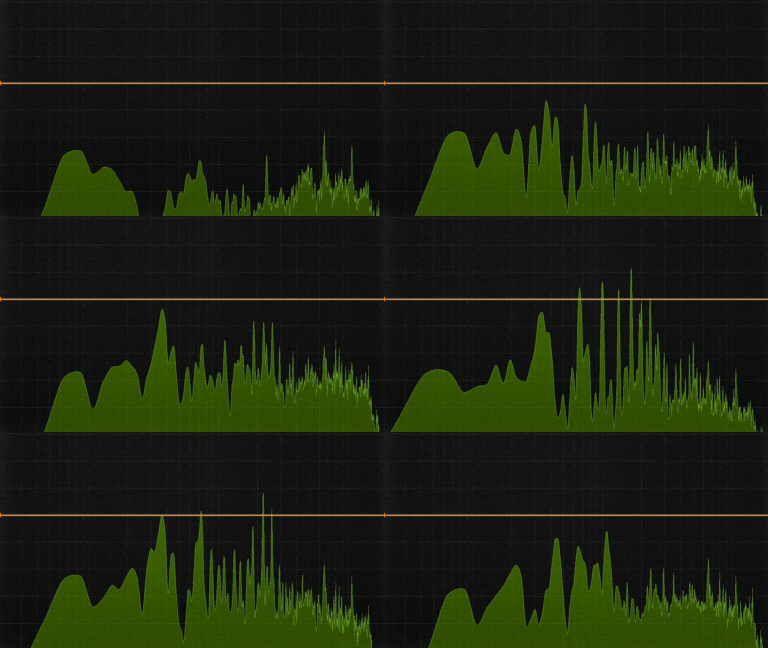
Unfiltered Music
This is an example of the full-spectrum sound frequencies in a typical unfiltered clip of popular music.
Filtered Music
Here is the exact same clip — after being filtered through the evidence-based algorithm backed by decades of scientific research.
As you listen to the music of the SSP, these highlighted frequencies send cues of safety to retune your nervous system, which can help you feel more settled, engaged and balanced.
What can I do while listening
Light movement, breathing exercises, and drawing, colouring or puzzle activities are recommended. High-intensity exercise, cognitively demanding tasks, and video games or computer work are generally not recommended.
What does the music sound like?
The SSP incorporates music you might already recognise. This music is processed through an algorithm that amplifies intonation variations within the frequency range of human speech, helping to train the auditory system to recognise cues of safety.
For those seeking a non-vocal, trauma-sensitive option, a classical playlist is also offered. This alternative preserves the core elements and original algorithms of the SSP while being more accessible.
